

- /
Our Strategic Analysis: Three Steps to Clarity
We move beyond general headlines. Our strategic analysis blends macro data with local expertise, summarized below.

ANALYZE THE MACRO MARKET
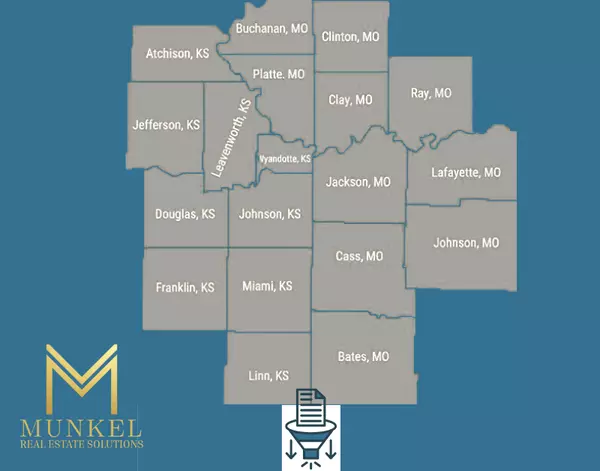
DEEP DIVE THE MICRO MARKET
We overlay proprietary local listing data, for the 8 core KC counties to assess local price momentum.

APPLY INSIGHTS TO YOUR HOME
We apply hyper-local data to your property for the most accurate and aggressive price strategy.

National Housing Brief
The housing market slowed in August as the summer buying season began to wind down. National home sales fell from both July and last August. Mortgage rates also remained high, making monthly payments harder for many buyers to absorb.
At the same time, buyers had more homes to choose from. National inventory increased, and more sellers reduced their asking prices. That gives buyers more room to compare homes and negotiate than they had in a tighter market. It does not mean prices are falling everywhere. National home prices were still higher than they were one year ago.
For buyers, the market is becoming less rushed, but affordability remains difficult. For sellers, buyers have more choices, which means pricing and preparation matter more than they did when almost every listing had less competition.
The Munkel Thesis
The Munkel Thesis:
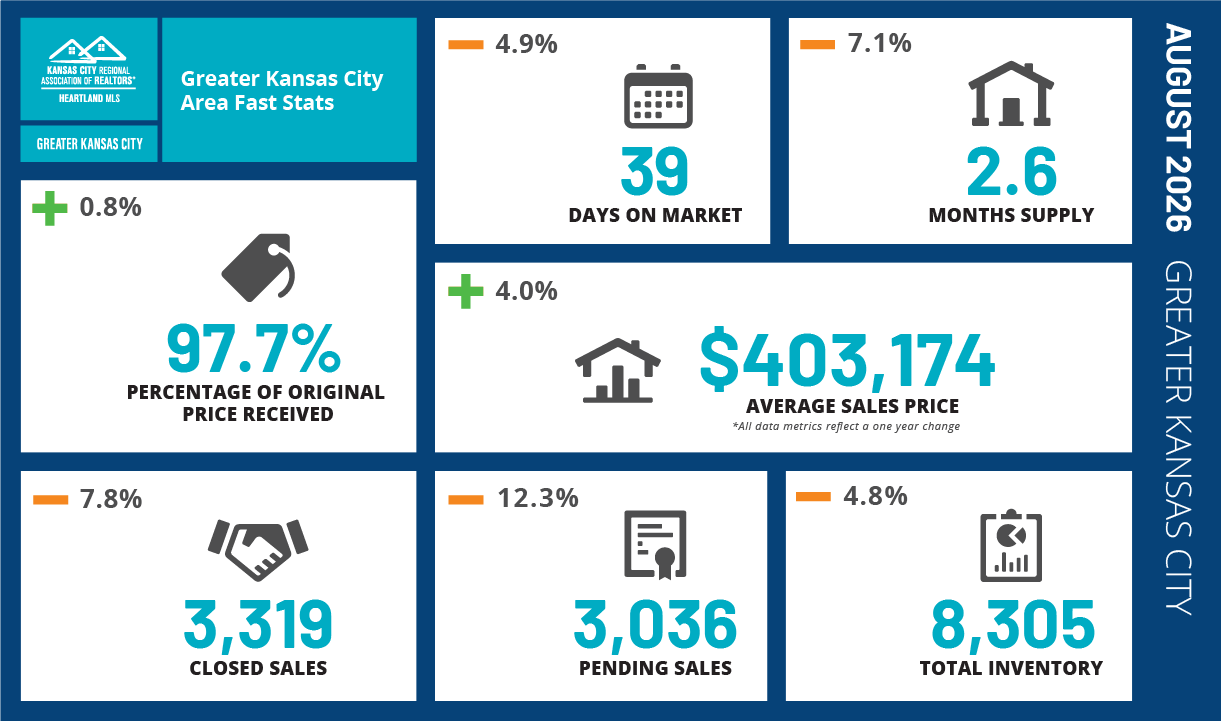
Kansas City followed the normal late-summer slowdown in August. The average home sold for $403,174, up 4.0% from last year. At the same time, fewer homes sold, fewer buyers went under contract, and homes took longer to sell.
Kansas City home values are still holding up, but buyers are moving more carefully. Part of that is seasonal. Summer is ending and the busiest part of the housing year is fading. Part of it is financial. Mortgage rates remain high, and buyers are paying much more attention to the monthly payment.
The result is a slower market, not a collapsing one. For buyers, that can create more time to compare homes and more opportunities to negotiate. For sellers, it means the market is less forgiving when a home is overpriced, poorly prepared, or does not compare well with other choices.
The spring market rewarded speed. The fall market is likely to reward good decisions.
How the Kansas City Metro Compares Nationally
Kansas City still has fewer homes available than much of the country. National inventory increased from last year. Kansas City inventory fell.
That matters because buyers in Kansas City may have more time than they did earlier this year, but they still do not have an endless supply of homes to choose from. That is one reason local prices can continue rising even while sales slow.
The national market is giving buyers more leverage. Kansas City is doing that too, but not everywhere and not to the same degree. Some parts of the metro are still tight. Others are giving buyers more negotiating room.
That is why the county, neighborhood, price range, condition of the home, and competing inventory matter more than a national headline. The Kansas City market is not moving in one direction. It is becoming more dependent on the individual property and the choices surrounding it.
________________________________________________________________________________________________________________________
What Buyers and Sellers Need to Know Right Now
1. How does the Kansas City metro compare nationally?
Kansas City still has less housing supply than the country overall. National inventory increased from last year. Kansas City inventory fell.
That gives local sellers more support than the national headlines might suggest, while buyers are still dealing with fewer choices. The market is slowing here, but Kansas City is not seeing the same buildup of homes for sale happening nationally.
2. Where is the Kansas City metro strong, and where is it softening?
Johnson and Clay counties remain among the tighter markets in the metro, with about 2 months of supply. Leavenworth County also continues to show strong sales and price growth compared with last year.
Jackson and Wyandotte counties slowed more noticeably in August. Fewer homes sold, fewer buyers went under contract, and buyers generally had more room to take their time.
Miami, Platte, and Douglas counties fall somewhere in the middle. There are positive signs in each, but the strength depends much more on the individual home and price point.
The simple takeaway: there is no single Kansas City market right now.
3. What price ranges have the most leverage?
Leverage is not sitting in one price range across the entire Kansas City metro.
Lower-priced homes generally attract a larger pool of buyers because the monthly payment is more accessible. That can create stronger competition when the home is priced well and in good condition.
As prices move higher, the buyer pool usually becomes smaller. That can create more room for negotiation, especially when a home has been on the market longer or is competing against several similar properties.
But price alone does not determine leverage.
A $500,000 home in Johnson County may be competing in a very different market than a $500,000 home in Jackson, Miami, or Wyandotte County. Condition, neighborhood, taxes, competing inventory, and how many similar homes are available all affect how much pressure either side can apply.
The higher the price, the more important it becomes to understand the specific competition around that home rather than relying on a metro-wide average.
4. Should buyers move now or wait?
Waiting makes sense if the payment does not work or the right home is not available. Waiting simply because rates might fall is a different decision.
If rates improve, monthly payments could become easier. But lower rates can also bring more buyers back into the market and increase competition.
Today’s slower pace gives buyers something useful: more time to evaluate the house and more opportunities to negotiate in certain situations. The right time to buy is when the property, payment, and long-term plan work together.
5. Should sellers list now or hold?
If selling supports the larger plan, the market can still produce a strong result. Prices are holding, but there are fewer buyers moving into contracts than there were earlier in the year.
That makes preparation more important. A seller who gets the price, condition, presentation, and timing right can still compete well. A seller who enters the market testing an optimistic price may find out quickly that fall buyers have more patience and more willingness to move on.
Waiting only makes sense if waiting improves the seller’s position.
6. Where in the Kansas City metro is opportunity showing up?
For buyers, opportunity is showing up where activity has slowed more than prices. That can create sellers who are more willing to discuss repairs, closing costs, financing help, or price.
Jackson, Wyandotte, and Miami counties are worth watching for those situations.
New construction also deserves a closer look. In parts of the metro, new builds are now priced close enough to resale homes that buyers should compare the two directly rather than automatically assuming a new home carries a large premium.
For sellers, tighter areas such as Johnson and Clay counties still benefit from limited supply. But limited supply alone does not guarantee a strong sale. The homes that stand out will still be the ones that make the best case for their price.
7. Are rates likely to change buyer behavior?
Rates are keeping some buyers out of the market and forcing others to lower their price range. They are also making buyers pay much closer attention to the total monthly cost of a home.
That means price matters, but so do taxes, insurance, repairs, maintenance, and financing terms.
For sellers, this matters because buyers may like the house and still decide the payment does not make sense. For buyers, it means negotiating the entire transaction can sometimes matter more than focusing only on the asking price.
8. Is a correction coming, or is this just normalization?
The August numbers do not point to a broad Kansas City price correction. Prices were still higher than last year, inventory remained limited, and the metro had only 2.6 months of supply.
What is changing is the pace. Homes are taking longer to sell, fewer buyers are going under contract, and some areas are giving buyers more room to negotiate.
That is a slower market. It is not the same thing as falling home values across the metro.
9. What is the smartest move this month?
For buyers, use the slower pace. Take the time to compare homes, understand the condition, study the resale potential, and negotiate where the seller’s position gives you room.
For sellers, do the important work before the listing goes live. Price, condition, presentation, and competition should be evaluated before buyers begin forming opinions about the home.
The fall market is likely to reward preparation more than speed.
10. What would I do if I were buying or selling right now?
If buying, I would start with the payment I am comfortable carrying today. Then I would focus on homes that fit the long-term plan, not just homes where I think I can negotiate the biggest discount. I would pay close attention to listings that have been sitting longer and sellers whose position may be changing.
If selling, I would study the competition before setting the price. I would make sure the home shows well, remove obvious objections where it makes sense, and enter the market with a clear plan rather than using the first few weeks to test an optimistic number.
As the market moves toward better balance between buyers and sellers, understanding where the negotiation begins becomes even more important. It does not start when the offer is written or when an inspection issue appears. Pricing, preparation, timing, competition, presentation, and the choices available to each side are already shaping the negotiation long before that point.
The advantage comes from recognizing those quieter negotiations early and guiding the process instead of reacting to it later.
________________________________________________________________________________________________________________________
Data Sources: Heartland Multiple Listing Service and Kansas City Regional Association of REALTORS®, August 2026/Kansas City Metro Market Statistics/National Association of REALTORS®, August 2026 Existing-Home Sales Report/Freddie Mac Primary Mortgage Market Survey, September 10, 2026/Realtor.com, August 2026 Monthly Housing Market Trends Report

Founder & Principal | Munkel Real Estate Solutions License ID: KS#00251082 | MO#2024042017
+1(913) 490-6011 | chris@munkelrealestatesolutions.com